


1
/
of
4
Little Bastard2059886171
[Sale] NAOSHIYA CUSTOM FACTORY "DECK3" Denim Deck Pants 3 (Natural)
[Sale] NAOSHIYA CUSTOM FACTORY "DECK3" Denim Deck Pants 3 (Natural)
Regular price
$174USD
Regular price
Sale price $174USD
Unit price
/
per
Sale price $174USD
Couldn't load pickup availability
Shipping to United States
Ships from Japan in 2–5 days- Product
- $174.00
- Estimated shipping
- Free
- Estimated total
- $174.00
Free shipping over $150 · items from multiple brands ship together.
Import duties & taxes not included. Shipping policy · How shipping works
- ✓100% authentic — from official Japanese brands & retailers
- ✓Refund support for damaged, defective or wrong items
- ✓Report quality issues within 15 days of delivery
Product DetailsTranslated from the original Japanese product informationⓘ
AI-assisted translation. In case of discrepancies, the original Japanese information takes precedence.
ⓘ
AI-assisted translation. In case of discrepancies, the original Japanese information takes precedence.Original Price 25,300 yen → 17,710 yen (30% off) SALE! SALE!!
Please note that we do not accept returns or exchanges.
【Unwashed Size】
M size Waist 41cm Rise 31cm Inseam 81cm (32 inch length) Total length 108CM
L size Waist 44cm Rise 32cm Inseam 77cm (30 inch length) Total length 103CM
【After washing】Pants length will shrink by approximately 3CM.
M size Inseam approx. 77CM
L size Inseam approx. 73CM
This is just an estimate.
5 years have passed since the first model was released.
The third model, "DECK3", has been completed after continuous minor changes.
What has changed from previous models?
Visually, a new tag is attached to the right back pocket.
Other than that, frankly speaking,
these are changes that only I would notice.
The fabric is the usual denim.
When I was thinking about these denim pants, I found that regular denim had many performance issues.
I was struggling with the fact that it wasn't stretchy, when I encountered this domestic denim at a fabric manufacturer's exhibition.
This denim, woven with low tension, is attractive for its mobility.
It is 100% cotton and not stretchy.
It's not stiff and rigid like typical denim, but comfortable to wear.
It has a crisp feel after washing, but a soft feel when worn.
The raw cotton is made in the USA. It is woven by a Japanese fabric manufacturer.
Japanese denim production is at a very high level globally.
I am very pleased with the fusion of Japan and America.
The sewing thread is a special order gray cotton thread made for our store.
A subtle but important point is that the thread thickness is varied depending on the sewing location.
The buttons are also custom-made for our store, with no markings, black donut buttons.
The black dahl-processed buttons will reveal the underlying copper alloy as they are used.
Previously, it had a 5-button fly, but from this model, the number of buttons has been reduced to a 4-button configuration.
This is not for a wartime look, but purely for practicality.
As is characteristic of our pants, the button fly is constructed with the same size buttons as the top button.
This is because men's fingers are thick, and larger buttons are easier to use.
In addition to the attention to detail in the materials,
the biggest feature of our deck pants is their construction.
The inspiration for making these pants came from over 10 years of experience as a jeans repair shop.
The prototype of jeans was created over 120 years ago.
By the late 1940s after the war, the basic form of jeans that continues today was already established.
A repair shop is like a hospital for jeans.
It's more like a field hospital than a clinic.
The jeans brought there are worn by different people, so they break in various ways.
However, they generally broke in the same way.
Perhaps it's the consequence of continuing to use the template created by people in the past?
I believe that men, often lacking in fashion sense, tend to seek safety in fashion.
Of course, there are also those who express their individuality, but this is a generalization.
The reason why jeans have become so ingrained in daily life.
It is because they are the most reliable pair of long pants that have been loved worldwide for a long time.
This is why jeans continue to flood the market today.
It is also the result of people who lack the ability to create new things continuing to produce them for sales.
Therefore, I decided to create the "current" denim pants that only a repair shop could make, and thus the first deck pants were born. I recall it took about 7 years from conception.
It has been 5 years since the first model was released, so these pants represent our unique approach to long pants, which we have been refining for about 12 years.
Including testing, I have discarded three pairs myself.
Not because they broke. But because the color faded and they always smelled even after washing with each wear.
I consider this the lifespan of a product.
We aim for the threads to break before the denim does, so there have been a few cases of stitch breakage in sold items. They are designed to break in a certain way, so the results are as intended.
The construction, which we focused on the most, has yielded the desired outcome.
A structure that can be repaired cheaply and quickly is the way forward for next-generation denim pants.
This is the path we, as a former repair shop, aimed for with our denim pants.
If you wear and wash them normally, they will hardly ever break.
The reason is the overwhelmingly small number of parts.
Sewing locations create significant stress where fabric overlaps.
Especially in denim pants, there is a lot of double-needle felled seam (巻き縫い) where four layers of fabric overlap, which also reduces mobility.
These pants are constructed to minimize overlap at all points.
In this model, the stitching on the seat has been simplified to the same level as our cargo pants to further reduce overlap. This is based on the results of my own cargo pants, which have been in long-term use without breaking.
In short, these are denim pants designed to enhance mobility and reduce stress.
The absence of a back yoke on the seat is also a feature.
I believe this part was created by Americans with large hips and narrow waists.
The back yoke uses a different grain of fabric to allow for movement. I think it's a well-thought-out structure.
However, the sewing that joins it is a double-needle felled seam, which ultimately increases fabric overlap and reduces mobility.
Furthermore, the chain stitching pulls tightly, increasing the density of the denim.
These pants do not have a back yoke.
The waist shaping is relaxed, and the curve is adjusted by the construction of the sides.
These are not pants that cinch at the waist. They are meant to be worn hanging on the hips.
Levi's has different waist constructions for the 501 and 505 models.
These pants might be easier to imagine if you think of them as having a flatter waistline similar to the 505.
The reason for the button fly in the front construction is ease of repair.
If a button comes off, reinforce the base and attach a new button, and it's done.
The relaxed waist curve requires explanation of each part to be complete.
First, the front pockets. All of our long pants feature patch pockets.
Patch pockets are external pockets.
This is due to the frequent breakage of the pocket openings we experienced during jeans repair.
Shrinking denim, curved pocket openings, pocket bags with different shrinkage rates, narrow pocket openings, and a man's hand going in...
There is no reason for them not to break. Considering the repair of this part, such a structure is impossible.
In the first place, they are difficult to use and have too small a capacity as pockets.
They also dry slowly after washing, which is not good. Our products are designed with drying speed after washing in mind.
The back pockets, and indeed the front pockets, are patch pockets.
We also do not do foolish things like attaching hidden rivets.
The combination of natural fiber denim and metal should be minimized.
The position and size of the pockets are changed with each minor update, and this model has the largest pockets.
The outseams, where stress should be avoided, are constructed without any extra parts.
It is unlikely that anyone else makes denim pants this way.
The waist of the pants is curved. The outseam flowing into the waistband uses selvedge as much as possible, with only the curved part finished with a serger to prevent fraying.
Instead of a single fold, the selvedge is split and inserted into the waistband, minimizing overlap.
This is a key point for durability and ensures minimal stress around the waist.
All sewing is done with single stitching, so there is no excess thread, which also contributes to weight reduction.
Chain stitching is a sewing method used for mass production convenience.
The original jeans from over 100 years ago prioritized strength, using single stitching with extremely narrow pitch.
We do not sew with a narrow pitch. This is for ease of repair.
With a narrow pitch, the fabric can tear during the disassembly process for repair.
I believe that product creation involves evolving using data left by past craftspeople and users.
These are not jeans, but they are my interpretation of denim pants, and I believe they are a legitimate evolution.
These pants are everyday wear and can also be used as workwear.
Their high mobility makes them recommended as work pants for people in motorcycle shops, car shops, or those who do a lot of outdoor work.
To keep the selling price as low as possible, I pre-purchased this denim in bulk because I will continue to use it.
We have not cut any corners on production costs, but have worked to reduce the selling price as much as possible. This is our form of corporate effort.
We cannot sell the same items continuously as standard products.
Because customers do not increase, and fundamentally the products do not break, they are not needed.
Despite this, we continue to produce deck pants in a form close to standard products, with repeated minor changes.
Why shop with ONECART?
- 1,100+ Japanese brandsDiscover fashion, anime, lifestyle and craftsmanship.
- One cart. One delivery experience.Shop across Japanese brands without navigating multiple Japanese stores.
- Built for international shoppersInternational payment, shipping and customer support.
Share


[Sale] NAOSHIYA CUSTOM FACTORY "DECK3" Denim Deck Pants 3 (Natural)
Recommended for you
-
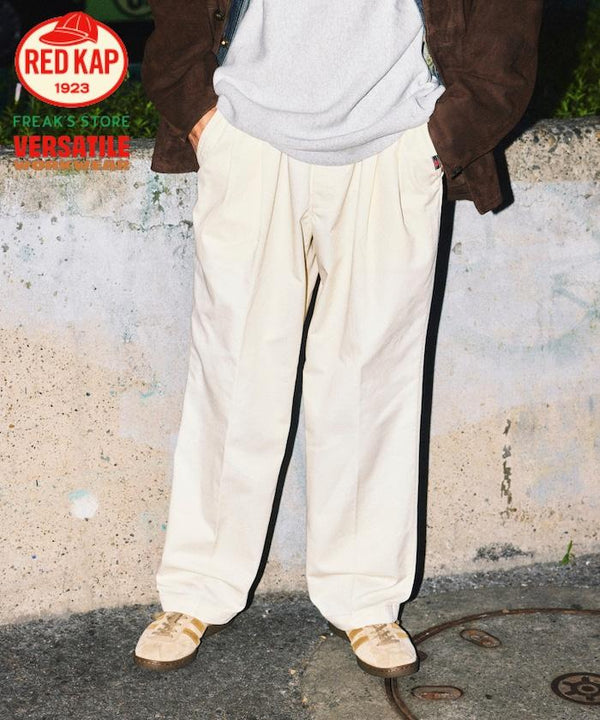 Pants|FREAK'S STORERED KAP × FREAK'S STORE Exclusive SMU PT-38 2TUCK WIDE PANTS$73 USD
-
 Sold outHair Accessories|KastaneOrganza Ribbon Barrette$40 USD
-
 -23%T-Shirts|FREAK'S STOREHELLO KITTY Animal Print T-Shirt$48 USD$62
-
 Pants|Thevon.Deep Tuck Wide Pants$72 USD
-
 Pants|alta sottotramarossa ALBERTO R-ELAX WHITE Men's Super Stretch Denim White (69171001-100)$598 USD
-
 Sold outPants|F.O.OnlineChibimaruko-chan Collaboration All-over DAISUKI Pants 9/10 Length$8 USD
-
 Sold outPants|F.O.OnlineTOMICA x BREEZE All-over Embroidered Pants 10分丈$19 USD
-
 Pants|B'2ndDROIT BELLO STRECH WOOL LIKE PANTS$163 USD
-
 Pants|WHO’S WHO galleryBarrel Tuck Pants$138 USD
-
 Pants|F.O.OnlineMochi Mochi Fleece Pants (Set-up Available) 10-length Quick-drying$26 USD
-
 Pants|B'2ndKnuth Marf Double Hem Fur Trousers (Unisex)$188 USD
-
 Pants|F.O.OnlineSoft Touch Velour Side Lace Flare Pants (10-length)$26 USD
-
 Pants|F.O.OnlineHem Check Straight Denim Pants - Full Length$43 USD
-
 Pants|F.O.Online【Link】Chewy Border Lettuce Leggings$21 USD
-
 Pants|F.O.OnlineAll-over pattern fleece pants (set-up possible) 10-length$30 USD
-
 Pants|Hoen - oitanonnative - DWELLER 5P JEANS TP COTTON CORD SULFUR DYE (GRAY) (NN-P4812)$351 USD
-
 Sold outHair Accessories|3COINSCheck Ribbon Bounce with Parts$6 USD
-
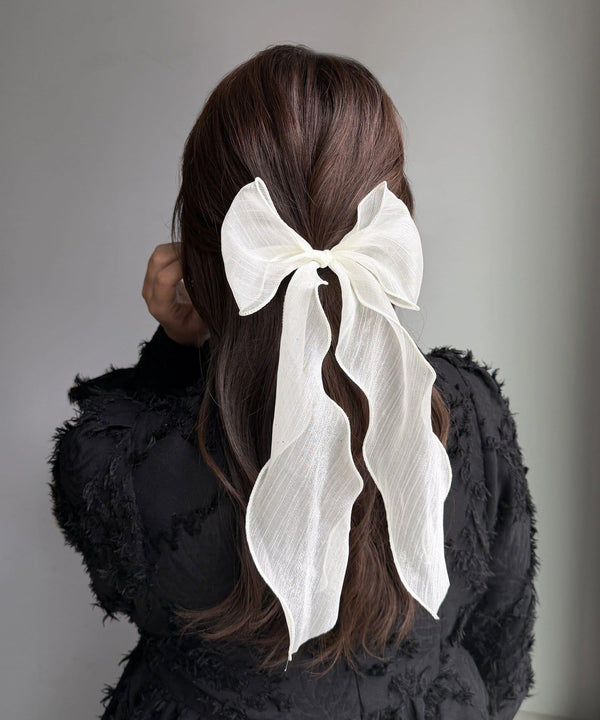 Sold outHair Accessories|LatticeSheer Ribbon Pony$4 USD
-
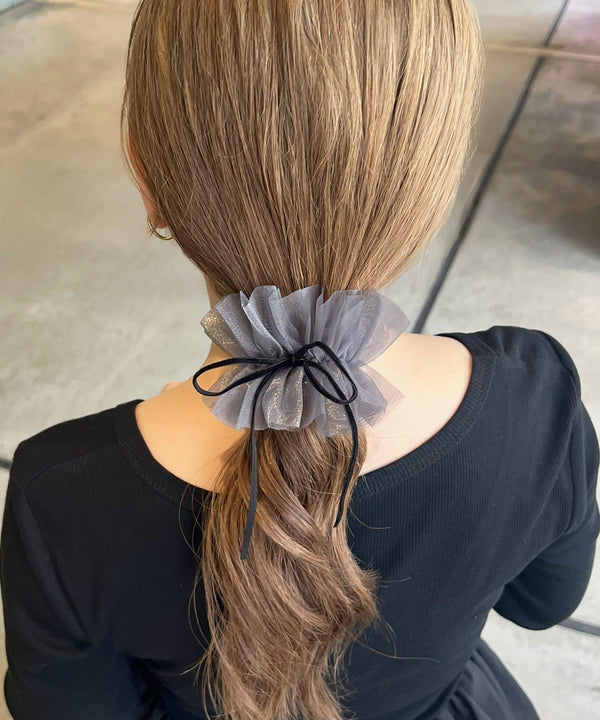 Hair Accessories|LatticeKEECO Planning Ribbon Hair Cuff$7 USD
-
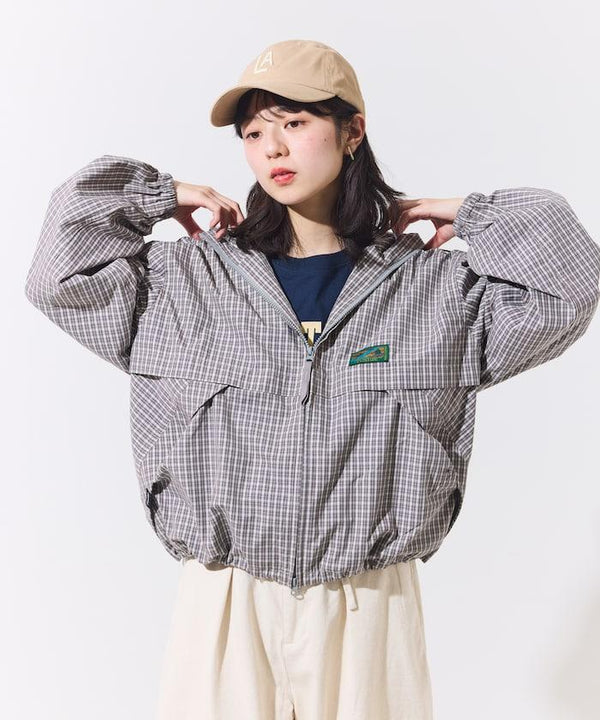 Blousons|FREAK'S STOREExclusive Zip Hoody$105 USD


